E-Penpals Guide — How to Exchange Email Letters Safely | Penpal-Net
An e-penpal (electronic penpal or email penfriend) is a correspondence partner who exchanges long-form, reflective letters primarily via…

Epistolary Writing Mastery provides a comprehensive pedagogical framework for personal correspondence, teaching narrative framing, emotional resonance, structural clarity, and stylistic flourishes to sustain compelling, long-term exchanges.
Master the essential anatomy of a captivating letter: balancing reflections, daily vignettes, and conversational prompts.
How to write seamless replies that address your pen pal’s questions while effortlessly steering the dialogue forward.
A rich catalog of creative conversation starters, thought-provoking questions, and thematic topics for every letter.
Writing an exceptional letter is an art form distinct from both academic essays and digital messaging. The hallmark of memorable correspondence is what epistolary theorists call ‘reciprocal intimacy’—the deliberate calibration of personal vulnerability matched with sincere, attentive inquiry into your partner’s inner world. Rather than presenting an inventory of daily tasks (‘On Monday I did laundry, on Tuesday I went to work’), master letter writers select a single observation or experience and unpack its sensory details and emotional resonance.
Maintaining structural harmony prevents letters from feeling disjointed. The classic epistolary rhythm begins with responsive warmth (acknowledging your partner’s previous letter and answering their questions), transitions into narrative disclosure (sharing your personal reflection or update), and concludes with intentional forward momentum (proposing new ideas and posing reflective questions). This ensures that every letter serves as both a satisfying destination and a compelling springboard for the next reply.
| Letter Component | Structural Function | Optimal Prose Balance | Rhetorical Goal |
|---|---|---|---|
| 1. The Responsive Bridge | Acknowledge recipient’s previous letter, answer their queries | 25–30% of total length | Demonstrate attentive listening and validation |
| 2. The Narrative Vignette | Unpack a specific personal story, thought, or observation | 40–45% of total length | Reveal personality, values, and sensory atmosphere |
| 3. The Inquiry & Probing | Pose open-ended, experiential questions | 15–20% of total length | Create effortless reply hooks for your correspondent |
| 4. The Sign-off & Postscript | Affectionate closing, teasing postscript (P.S.) | 5–10% of total length | Leave a memorable, lingering impression |
Focus on the ‘why’ and ‘how’ rather than the ‘what’. Instead of listing your weekly tasks, describe a specific moment that surprised you, a book that provoked you, or a sensory memory that lingered. Storytelling thrives on specific details rather than broad summaries.
Always weave 2 to 4 engaging, open-ended questions into your letter that directly relate to topics your pen pal introduced. Giving your partner clear, interesting prompts dramatically lowers the friction of sitting down to reply.
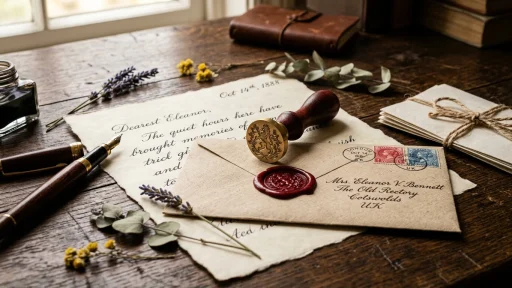
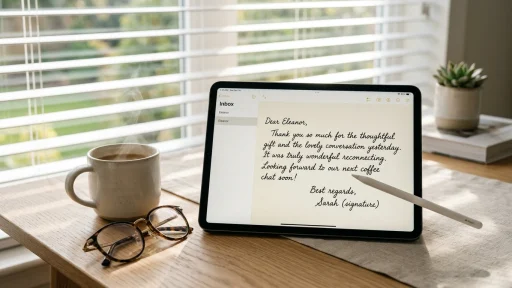
Handwritten letters carry cherished tactile intimacy, but typed letters (especially on vintage typewriters or formatted neatly) are fully embraced, particularly for writers with dysgraphia, arthritis, or a preference for long multi-page essays.