
✨ This article was AI edited. Editorial responsibility: Penpal-Net.info.
The penpal tradition is a historic cultural practice of exchanging personal, handwritten letters and postal artifacts between correspondents across distinct geographic or cultural boundaries. Rooted in the 19th-century postal revolution, the tradition emphasizes artisanal stationery, calligraphy, philately, and reflective storytelling, serving as an enduring analog counterbalance to modern instant digital communications.
Few human practices bridge intimate emotional vulnerability with tangible craftsmanship quite like the penpal tradition. For generations, men, women, and children across every continent have gathered at writing desks, dip pens and fountain nibs in hand, committing their inner thoughts to paper before sending them across oceans. In an era dominated by fleeting digital text and algorithmic chatter, the revival of epistolary art represents more than nostalgia—it is a conscious movement toward slow living, mindfulness, and intentional human connection.
Historical Roots: How the Postal Revolution Birthed a Global Culture
While personal letters date back to classical antiquity, the democratic penpal tradition as we understand it today emerged directly from the Victorian postal reforms of 1840. The introduction of Rowland Hill’s Uniform Penny Post in the United Kingdom transformed correspondence from a luxury reserved for the aristocracy into an accessible universal privilege. For the first time, ordinary citizens could dispatch a letter anywhere in the realm for a single penny, payable by the sender via the world’s first adhesive postage stamp—the Penny Black.
This institutional breakthrough sparked an international revolution in correspondence. By the late 19th and early 20th centuries, epistolary clubs, scholastic exchanges, and newspaper pen-friend columns began proliferating across Europe, North America, and Australia. Below is an overview of how the penpal tradition has adapted across key historical eras:
| Historical Era | Defining Postal Innovation | Average Delivery Pacing | Primary Cultural Function |
|---|---|---|---|
| Victorian Era (1840–1901) | Uniform Penny Post & Adhesive Stamps | 1 to 3 days (domestic rail network) | Literary self-expression, family bonds & romance |
| World War I & II (1914–1945) | V-Mail & Airgraph Microfilm System | 2 to 4 weeks (military postal service) | Morale preservation, civilian support & solidarity |
| Post-War Era (1950s–1980s) | Standardized Airmail & International Reply Coupons | 7 to 14 days (transatlantic air transit) | Cold War cultural diplomacy, student exchanges & language |
| Modern Renaissance (2010s–Present) | Mail Art, Philately & Digital-to-Postal Hybrids | 2 to 6 weeks (global postal logistics) | Mindfulness, tactile art therapy & slow-living rebellion |
Wartime Epistolary Solidarity: Letters That Shaped Nations
The penpal tradition reached peak emotional significance during the global conflicts of the 20th century. During World War II, pen pal relationships between soldiers deployed overseas and civilian volunteers at home provided an indispensable psychological lifeline. Millions of lightweight “V-Mail” letters (microfilmed sheets designed to conserve aircraft cargo weight) carried daily encouragement across battle zones.
These wartime exchanges demonstrated that a letter is never merely paper and ink; it is physical proof of human remembrance. For those seeking literature documenting these historic bonds, our curated reading list of the best penpal books and correspondence memoirs explores remarkable true stories of lives altered through postal camaraderie.
The Anatomy of Traditional Postal Craftsmanship
What elevates the traditional penpal experience above digital text is its multi-sensory nature. Every component of a traditional letter conveys intentionality and creative care:
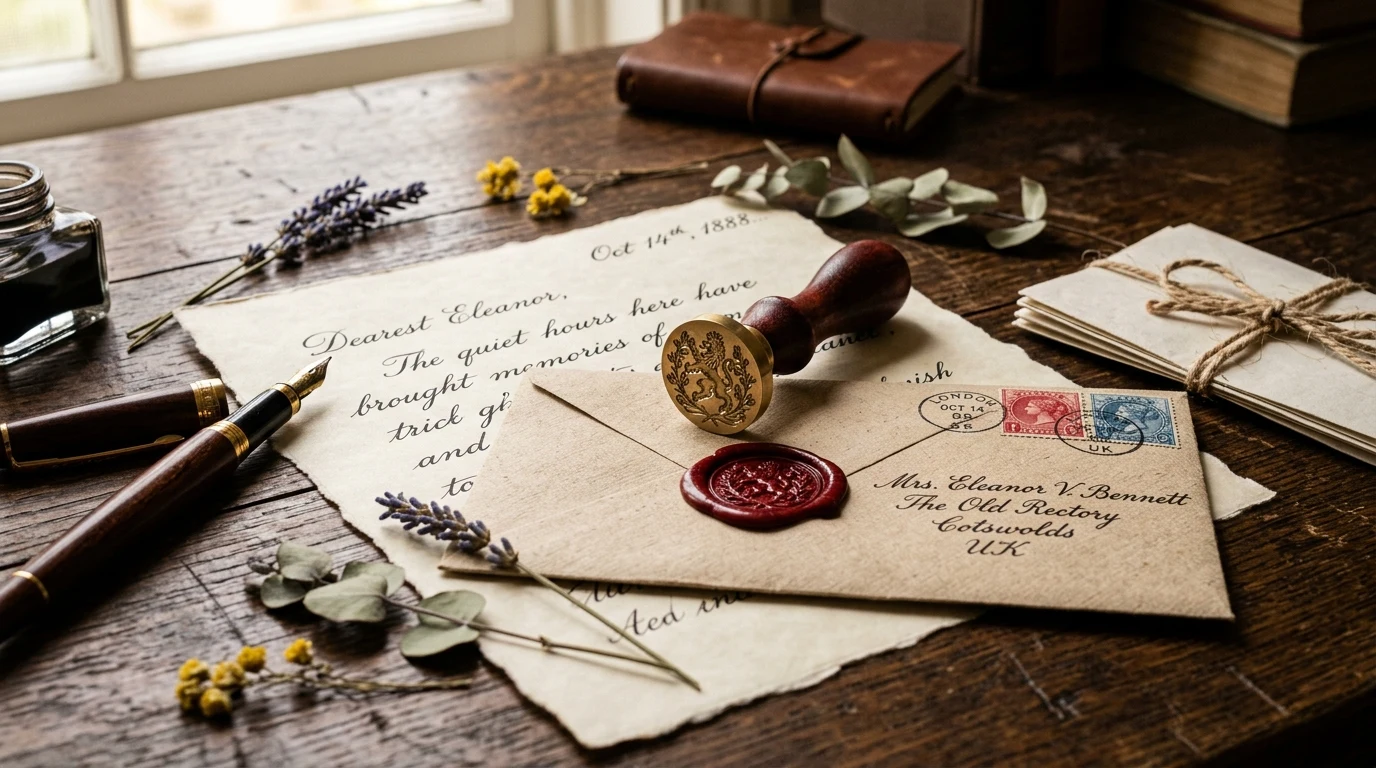
- The Weight and Texture of Paper: Serious correspondents often choose cotton-rag paper (80–120 gsm) or Japanese Tomoe River paper, known for its smooth feathering resistance when paired with liquid inks. The physical weight of the sheet signals value before a single word is read.
- The Expressive Flow of Fountain Pens: Unlike ballpoint pens that require downward pressure, fountain pens glide across the page using capillary action. The variation in ink shading, flex-nib line variation, and custom color formulations (from deep Prussian blue to autumnal sepia) infuses the handwriting with personal character.
- Philatelic Storytelling: Selecting postage stamps is an integral part of the tradition. Senders deliberately choose commemorative stamps that showcase their country’s wildlife, architecture, or folklore, turning the envelope exterior into a curated art gallery.
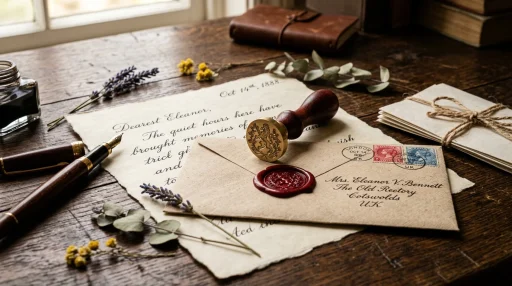
- The Sealing Wax Ritual: Heating flexible sealing wax over a small flame and pressing an engraved brass seal into the molten pool creates a tactile seal reminiscent of centuries past, ensuring the recipient experiences the visceral pleasure of breaking the seal.
Transforming ordinary envelopes into intricate canvases through washi tape layering, vintage rubber stamps, and calligraphy adds immense joy to both sender and receiver. Explore our step-by-step techniques on how to decorate a penpal envelope to incorporate these creative elements into your outgoing mail.
The Epistolary Mindset: Writing as Meditation
Participating in the penpal tradition demands an intentional shift in cognitive tempo. While emails and text messages reward brevity and haste, a traditional letter rewards narrative richness. Senders capture not just events, but textures: the scent of rain on dry pavement, the taste of morning bread, the lingering melody of an old song, or reflections on personal growth.
To cultivate this conversational richness, writers rely on established epistolary principles: asking thought-provoking questions, reflecting on the recipient’s previous statements, and sharing honest vulnerabilities. If you are refining your epistolary voice, study our core recommendations on how to write engaging penpal letters.
Passing the Tradition to the Next Generation
As screens capture ever-greater shares of childhood attention, introducing young people to the penpal tradition has gained urgency among educators and parents. Writing letters teaches essential developmental skills that keyboards rarely reinforce:
- Spatial Awareness and Fine Motor Control: Controlling a pen across lined or unlined paper develops fine hand-eye coordination and spatial reasoning.
- Delayed Gratification: Waiting days or weeks for a postal response teaches patience in an environment saturated with instant streaming and instant gratification.
- Geography and Cultural Literacy: Tracking postmarks on a physical wall map transforms abstract geographical coordinates into tangible human landscapes.
- Archival Preservation: Unlike digital messages stored on proprietary servers subject to obsolescence, physical letters stored in shoeboxes or ribbon-bound binders become family heirlooms that survive for decades.
Frequently Asked Questions About the Penpal Tradition
Why is the penpal tradition experiencing a modern revival?
The revival is driven by digital fatigue and the desire for tactile, authentic experiences. Many individuals feel overwhelmed by high-speed digital communications and find deep peace in the deliberate, artistic process of handwriting, envelope crafting, and receiving physical mail.
What materials are essential to start practicing traditional penpaling?
All you fundamentally need is a comfortable pen, fountain-friendly or standard writing paper, envelopes, and appropriate postage stamps. Enthusiasts often expand their toolkit with fountain pens, custom sealing waxes, washi tape, and vintage ephemera.
How do traditional penpals protect their privacy?
Traditional penpals frequently use a Post Office Box, university mail desk, or commercial mail receiving service rather than sharing their private home address. This safeguards personal boundaries while allowing full participation in physical correspondence.
How long do international letters typically take to arrive?
Depending on bilateral postal agreements, international airmail typically takes 7 to 21 business days. In epistolary culture, this transit delay is embraced as part of the slow-living charm, allowing thoughts to mature between exchanges.
Get our latest guides, news, and insights highlighted in your Google Search & AI Overviews.