
✨ This article was AI edited. Editorial responsibility: Penpal-Net.info.
An international pen pal is a correspondence partner residing in a different country with whom one exchanges letters, postcards, or digital correspondence to foster cross-cultural friendship, practice foreign languages, and share lived experiences. International pen pal exchanges navigate cross-border postal systems, cultural etiquette, and geographic time zones, transforming everyday communication into a bridge for global understanding.
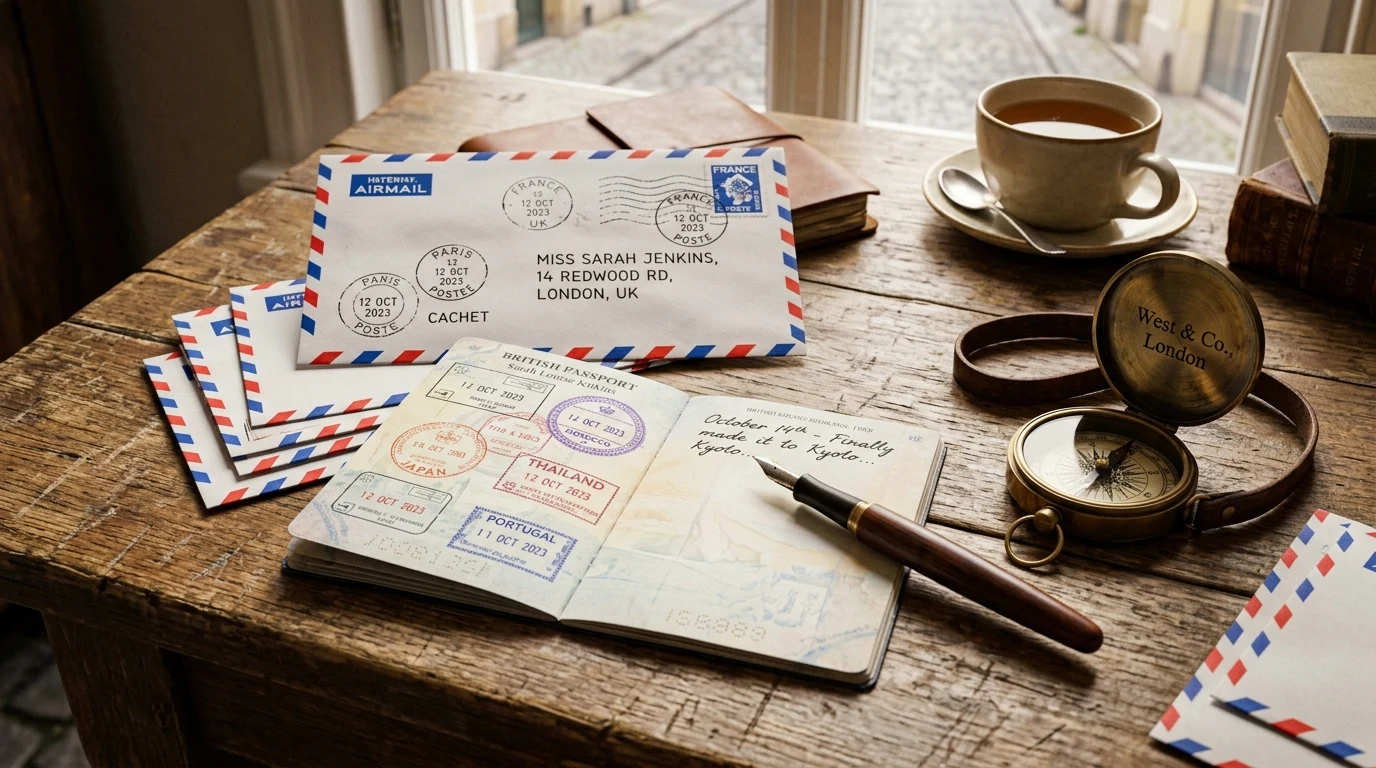
Opening your mailbox to discover an envelope bearing exotic stamps, an unfamiliar foreign postmark, and colorful airmail ribbons is an experience that digital pings simply cannot match. Having an international pen pal turns the vast, abstract globe into an intimate network of human stories. Whether you are corresponding with an artist in Kyoto, a coffee farmer in Colombia, or a history student in Edinburgh, international penpaling breaks down geographical isolation and builds bridges of mutual empathy across borders.
The Transformative Magic of Cross-Border Correspondence
In our hyper-connected world, we consume vast amounts of international news, but algorithmic media rarely offers genuine insight into ordinary daily lives abroad. International pen pal relationships provide a deeply personal, unfiltered lens through which to perceive foreign societies:
- Living Cultural Immersion: Learn about holiday customs, family dinners, seasonal weather shifts, and regional traditions directly from the people who live them, rather than through curated travel magazines.
- Authentic Language Acquisition: For language students, writing to a native speaker exposes you to colloquial turns of phrase, everyday expressions, and nuanced cultural humor that textbooks cannot teach.
- Global Perspective & Tolerance: Hearing firsthand how global events impact ordinary families in other hemispheres fosters nuanced critical thinking and diminishes xenophobic stereotypes.
- The Joy of Philatelic Ephemera: Collecting international postage stamps, cancellation marks, foreign tea wrappers, and postcards turns your letter drawer into a personal museum of world geography.
Navigating Global Logistics: Postal Systems, Customs, and Delivery Times
Unlike domestic correspondence where mail arrives in a few days, international postal transit requires patience, preparation, and practical logistics knowledge. The table below outlines typical transit times and postage expectations across major global postal corridors:
| Postal Corridor | Average Airmail Transit | Typical Letter Weight Limit | Recommended Enclosure Type | Tracking Availability |
|---|---|---|---|---|
| North America to Western Europe | 7 to 12 business days | Up to 20 grams (Standard stamp) | Paper letters, stickers, flat postcards | Optional (Registered Mail only) |
| North America to East Asia / Oceania | 10 to 18 business days | Up to 20 grams | Folded stationery, paper ephemera | Optional (Registered Mail only) |
| Europe to South America / Africa | 14 to 28 business days | Up to 20 grams | Lightweight airmail stationery | Recommended for rural destinations |
| Intra-European Union | 4 to 7 business days | Up to 50 grams (Priority) | Stationery, small craft samples, tea packets | Standard postal network |
Essential Customs & Postal Regulations for International Senders
When preparing mail for international transit, understanding universal postal regulations prevents your letters from being seized, returned, or subjected to unexpected import duties:
- Stick to Paper and Flat Enclosures: Standard international letter rates apply strictly to documents and paper goods. Including thick rigid objects (such as bulky charms, candy, coins, or organic plant seeds) can cause postal sorting machines to tear the envelope or trigger customs inspections. If you wish to send small gifts, declare them properly as a merchandise parcel.
- Clear, Standardized Address Formatting: International sorting hubs rely on automated optical character recognition. Always write the recipient’s country name in capital English letters on the final line of the address block (e.g., “JAPAN” or “GERMANY”) to ensure the originating postal service routes the pouch correctly.
- Use Proper Airmail Labels: Affix an official blue “Airmail / Par Avion” sticker or clearly write “PAR AVION” in the upper-left corner below the return address to ensure the dispatch travels via air freight rather than slow surface sea cargo.
Cultural Sensitivity & Epistolary Etiquette Across Borders
Writing across linguistic and cultural divides requires emotional intelligence and mindful humility. To nurture a fruitful international friendship, keep these cultural principles in mind:
- Avoid Cultural Assumptions and Stereotypes: Do not assume your penpal’s daily life mirrors stereotypes portrayed in Hollywood films or news headlines. Ask open, curious questions about their personal routines rather than making broad generalizations.
- Write with Clear, Accessible Vocabulary: If your penpal is writing in English as a second or third language, avoid dense colloquial slang, regional idioms, or complex archaic phrasing unless they ask for explanations. Clear, expressive sentence structures demonstrate respect.
- Acknowledge Local Holidays and Traditions: Take note of the festivals and cultural milestones celebrated in your partner’s country (such as Lunar New Year, Diwali, Midsummer, or Día de los Muertos) and send thoughtful greetings in advance.
- Respect Different Communicative Rhythms: Different cultures perceive time and communication pacing differently. In some nations, an unhurried, multi-week reflection before replying is standard courtesy. Never rush your correspondent.
For more actionable advice on opening your correspondence with warmth and respect, consult our comprehensive guide on how to write a first letter to a penpal.
Frequently Asked Questions About International Pen Pals
How much does it cost to send an international letter?
In most Western countries, a standard international airmail stamp costs between $1.50 and $3.00 USD for letters weighing up to 1 ounce (approx. 20–28 grams). Extra postage is required if the letter exceeds standard weight or thickness thresholds.
Do I need to be fluent in a foreign language to have an international pen pal?
Not at all. Millions of international penpals communicate in English as a shared global language. Many international correspondents specifically welcome English letters to improve their own language proficiency while sharing their culture.
What can I safely include inside an international envelope?
Safe, flat enclosures include postcards, bookmarks, stickers, washi tape samples wrapped around plastic cards, pressed dried flowers, paper drawings, and flat tea bag packets (provided food imports are permitted by the destination country).
How do I protect my privacy when writing internationally?
Use a Post Office Box or commercial mail forwarding address rather than disclosing your residential home address. Keep financial details and sensitive personal identifying data strictly confidential.
Get our latest guides, news, and insights highlighted in your Google Search & AI Overviews.